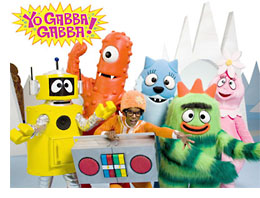
 The long awaited debut of Yo Gabba Gabba on Nick Jr., the new preschool television show with a wonderfully fresh approach to learning, has finally arrived! An early pilot for the show first appeared online in mid-2006, making a viral splash, and caught the attention of a number of executives in the broadcast world. Nick Jr. made it official at the start of 2007 with an announcement that the show would start airing late this summer. A number of preview clips have been available on YouTube and OnDemand cable services. As of this week the show can be seen about mid-morning each weekday throughout the country!
Yo Gabba Gabba is like a Saturday Night Live variety show for preschoolers. Each episode is punctuated with interesting musical guest stars, clever animation “mini-shows” and fun and quirky shorts of retro video games and dancing kid clips. Dance and movement are the underlying theme to almost every aspect of the show. Many performers slated to appear on the show include: Mark Mothersbaugh of Devo fame and critically acclaimed music aeficianado of film and television, The Aquabats, The Aggrolites, Biz Markie, The Shins, Sugarland, The Salteens, Smoosh, Mya, Sean Kingston, Nikki Flores, Rahzel, Cornelius and Shiny Toy Guns. The show also promises other surprise appearances from guests like Tony Hawk, actor Hector Jimenez, Elijah Wood, Laila Ali, and others.
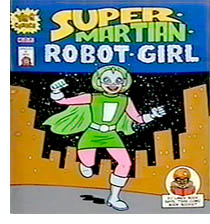 The first season of Yo Gabba Gabba will include 20 episodes. Much like any new show, it takes some time to hit your stride and find that natural beat. The first few shows are good; some parts are stronger than others in their appeal, but an improvement in show quality can be seen from episode to episode. The second show, themed “Summer”, is very entertaining. The performance by the band The Aquabats with their song “Pool Party” has made me an instant fan of the group. A segment called “Cool Tricks” where kids (and sometimes adults) show off a unique skill they have learned, and a re-occuring animation segment called “Super Martian Robot Girl” are also very entertaining. I thought this show was good, and then I saw the fourth episode called “Dance”. It was just plain rockin’ with great rap music, a “red-light, green-light” approach to dancing for youngsters, and striking video effects that made me feel like going out to a the dance club! I’ve seen a wonderful progression in the quality of music over this short span of shows and am eagerly awaiting more of the same with shows yet to air.
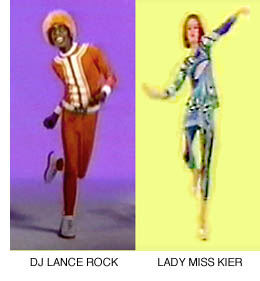 Whether intentional or not, you can see many other influences on the show. The main sets and some of the characters found in Yo Gabba Gabba have a Kure Kure Takora flavor, a popular Japanese program that aired in the early 70’s. While the Kure Kure Takora show was originally aired as a children’s show, it’s storylines and themes might not have been the best content for younger audiences. It does, however, have a significant adult following. The characters themselves share a creative quality from artists like Tim Biskup and Paul Frank. The main human character, DJ Lance Rock, appears to share a similar fashion sense from Lady Miss Kier of the band Deee Lite. (Maybe an excellent future guest for the show!)
So, as a Gen-X’er, I’m hooked. I’ve been waiting for this show ever since Pee-Wee’s Playhouse stopped producing new shows. But will young children like it? You bet! Strong rhythmic music and encouraging movement is an excellent way to grab the youngest of viewers. The visuals are fun and appealing. There are many parts of the show young children can relate to directly and others that will create an aspirational desire to try something new. It encourages children to feel good about moving and not to worry about “doing it the wrong way.” Make sure your living room floor is clear, because these future young hipsters will get up off the couch and start moving and grooving soon after the show begins. You just might find yourself dancing around to the show as well.
In my mind, children’s television shows can be grouped into two camps. There are shows that children and adults can watch, love, and learn from together. Then there are shows that children will watch and adults can’t stand. Yo Gabba Gabba is one for young and old alike with plenty to please both groups. The show is very entertaining in a fresh whimsical style wrapped in cool pop culture, animation, music and dance. Get ready to hear lots more from this clever, unique, and inspiring show!
BONUS INFO:
Check out these other sites about the show:
Yo Bloga Bloga
Archive of the early Yo Gabba Gabba website
Yo Gabba Gabba LiveJournal
Photos of World Premiere of Yo Gabba Gabba, July 8, 2006
Average Rating: 4.9 out of 5 based on 219 user reviews.


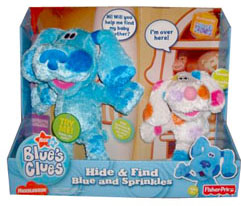 I’ve been wondering when RFID would begin to take a hold in the toy market. RFID is a technology that takes advantage of small wireless computer chips that have the ability to talk to one another. One way of thinking about the technology is that if a shirt had an RFID tag in it, whenever you dropped off the shirt at a dry cleaner, the radio frequencies emitted by the tag would alert some other computer in the store; it would know instantly who you are and how you would like your shirt laundered without ever saying a word to anyone. RFID allows any two (or more) items embedded with the technology to know about each other, and know how far away they are from each other. RFID used within toy products has the wonderful ability to work with the way children naturally play, and also offers new and imaginative enhanced play opportunities. Imagine a toy house complete with furniture, different dolls of family members, pets and vehicles that all could be electronically aware of each other. As the dog approaches the boy doll, the boy could speak the dog’s name. As a car drives up to the house, its headlights could turn on. As the mommy doll enters the front door, it could speak “Kids, I’m home!”